
Holiday Family Transportation in Orange County: Two Houses
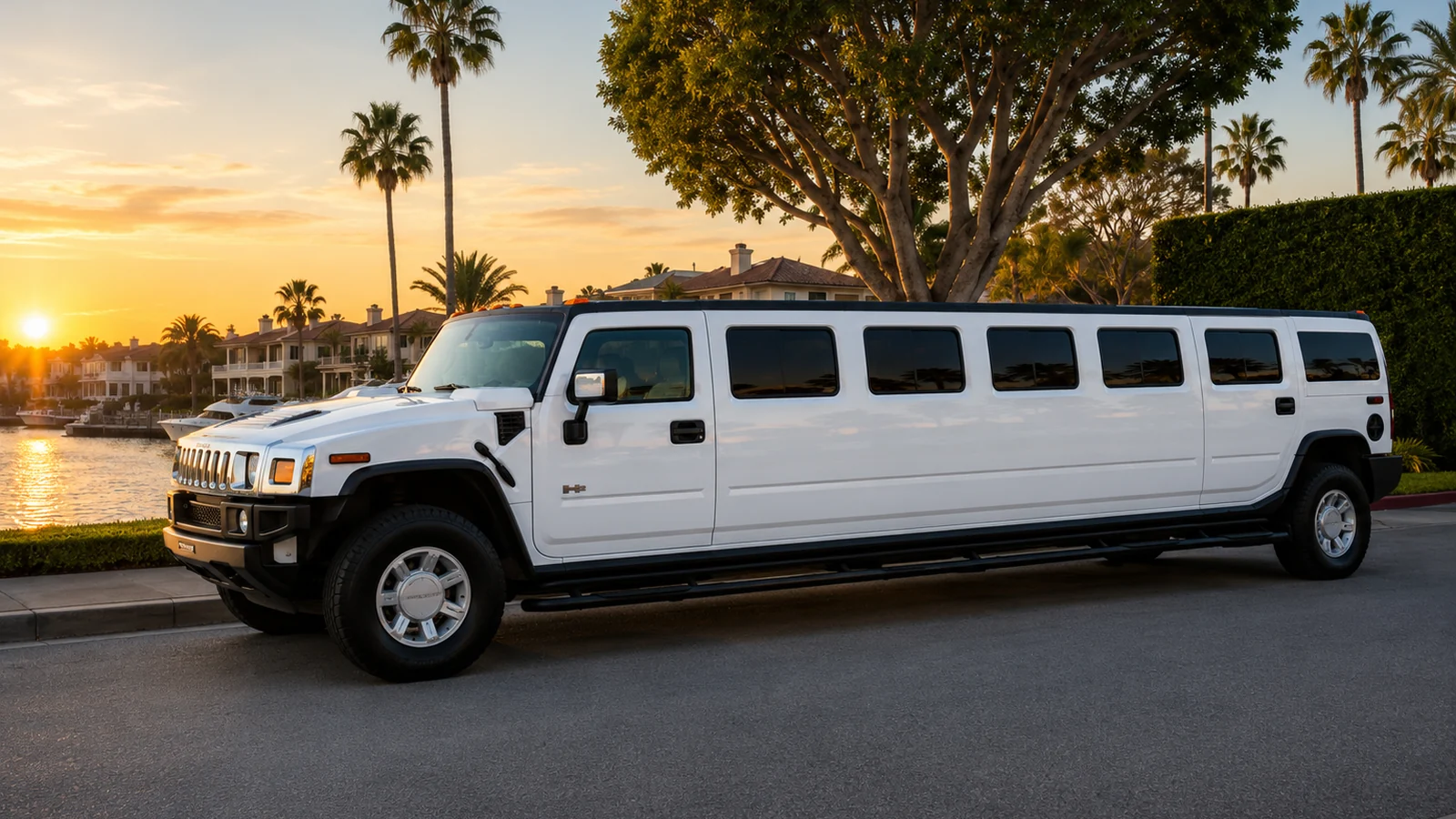
For a family dinner in late November or December, a chauffeured car fixes two problems at once: it takes the parking off a residential street that cannot hold the cars, and it moves the whole group between two houses in one trip. You book it for the second move, not the first.
The parking problem at a family house
Every family has a house like this. One driveway, two cars already in it, and a street that was never laid out for this many cars.
Say the family is thirty people. The first eight cars are fine. By the twelfth, people are parking around the corner and walking back in the dark holding a dish. By the twentieth, somebody is on the lawn, somebody else is across a driveway, and a neighbor is at her window counting the headlights.
Nobody plans this. It happens every year, at the same house.
A chauffeured car takes the arrival out of the equation. It pulls to the curb, everyone gets out at the front walk, and it leaves. No circling. No three-point turn in a cul-de-sac. No moving your car at ten because you are blocking somebody’s gate.
It also solves the neighbors, which nobody mentions. A residential street absorbs two or three extra cars without anyone noticing. Thirty is a different event: doors, headlights, idling, and a gate blocked when somebody needs to leave. One vehicle that drops and goes is quieter, and it is the difference between a street that tolerates your family’s annual dinner and one that starts a group chat about it.
The driveway that holds two is not a rare house. It is the normal one.
Two houses, one evening
Here is the shape of the night. Dinner at one relative’s house. Dessert at another, because one has the dining table, the other has the good oven, and neither will give up the claim.
Usually the two houses are fifteen minutes apart or less, and that short hop is the trip nobody wants to make twice.
The first move is easy. Everyone is fresh and the cars are empty. The second move is where the evening goes sideways, in the same three ways every year.
The departure takes longer than the drive. Twelve people leaving a house is not a moment. It is a process: coats, the dish you brought, the dish they send home, one child’s shoes, the leftovers, and a hallway conversation that has been running for forty minutes.
Half the group will want to stay. This is not a planning failure. It is what happens when people who like each other are in a warm house with the table still out. Someone’s uncle is mid-story, and the kids have found the back room.
Someone will offer to drive separately. “We’ll just meet you there.” They arrive twenty minutes late, park four streets away, and walk in carrying the pie.
| The second move | Driving yourselves | One car |
|---|---|---|
| Leaving the first house | Three groups leave at three times | One departure, one arrival |
| Parking at the second house | The same problem as the first, on a street with less room | Curb drop at the front walk |
| The person driving | One adult per car, on duty | Nobody |
The fix is boring and it works. Name the departure time at dinner, not at the door. Not “we should think about going soon.” A time, out loud, from the person who booked the car. Then the getting ready happens inside the last twenty minutes.
And take everyone at once. The point of one vehicle is one arrival. If half walk in together and the other half trickle in over forty minutes, you have paid for a car and kept the problem.
If someone genuinely will not leave, let them stay. A group that size does not move as a unit. The car leaves once, with everyone in it. The rest is next year’s conversation.
Grandparents: the real reason families book holiday transport
Ask a family why they booked and they will say it makes the evening easier. Ask which part, and the answer is a person.
The number that matters is not the drive between the two houses. It is the last stretch from the curb to the front door: a sloped driveway, a dark walk, a step at the porch, a handrail that may or may not be there.
On a normal evening, the car carrying your grandmother parks out front. Tonight that spot belongs to a cousin’s truck, because everyone drove.
A chauffeured car stops at the curb by the walk, waits while she gets out, and moves on. That is the whole product.
The vehicle matters too. A low stretch looks like the occasion, and getting down into one is its own negotiation for a hip that does not bend the way it used to: you sit, lower yourself, then swing your legs while somebody holds your arm.
A Sprinter is taller. You step onto a running board, hold a grab handle at shoulder height, and sit at dining chair height. The door opening is tall enough that nobody folds in half. For a passenger with a replaced hip or a bad knee, that difference is the trip.
Two things worth doing before the night. Ask the host which entrance has the fewest steps, because the front walk and the side gate are rarely the same. And tell dispatch that a passenger needs the door, so the chauffeur positions the car instead of stopping wherever the gap is.
Children, car seats and the arithmetic
Car seats are the part families get wrong, and they get it wrong on the phone.
Who brings them: usually the parents, and that is the right answer. Some operators keep a few seats, many do not, and a seat that exists may not be the size a particular child needs on a particular night. Availability varies by vehicle and by date. Ask at booking, give the ages and weights, and treat a seat as something to confirm rather than something included.
Who fits them: the person who owns them, in the driveway, before everyone is in coats. Fitting them is a puzzle with one correct answer, and it takes ten minutes the first time. Doing it at the curb in the dark while seven people wait is how a booking starts badly.
A child in a car seat takes a full seating position, and some seats need clearance either side of them, so a group of eleven that includes four children in seats is not the same booking as eleven adults. Rear facing needs more room than forward facing, and a booster is narrower than a convertible. Give dispatch the whole picture: eleven people, four of them children, ages two to seven. Not eleven.
Getting that number right is the difference between a vehicle that works and one that arrives with no room to spare.
The sizing guide covers it in more detail than a phone call can.
The quiet advantage, if the operator agrees to it: your own seats can stay fitted in the vehicle all evening. Drive yourselves and they come out at house one and go back in at house two, in the dark, twice, with a child on the curb. Ask at booking whether your seats can stay in the car between stops.
The designated driver nobody wants to be
There is always one. The one who has a beer at the start and water after. The one who leaves when the children leave. The one who drives home at eleven while the rest of the car sings.
The arithmetic, say twelve people in three cars: three drivers, so three sober adults. A quarter of the adults at the table are on duty all evening. They arrive alert, they watch the clock, and they miss the part of the night that happens after nine.
In one car, that number is zero. Nobody at the table is on duty, and the person driving is paid and is not related to anybody.
That is the argument. Not a lecture. Just the count.
It is usually the same person every year, and not by choice. Ask them in October whether they would rather not. Most will say something polite. Some will say yes.
On the alcohol question: California sets the drinking age at 21, and the Department of Alcoholic Beverage Control enforces it. A hired car does not change the number.
Splitting the cost without a family meeting
One person books. One card. This is not about trust. The operator needs a name, a number, and somebody who answers the phone at 9pm when the plan changes.
Who pays is the question that gets discussed at the table in the wrong tone.
Two ways to split it. By household, which is easy to say out loud and means the family of five pays the same as the couple with no children. Or per head, fairer when the households are wildly different sizes and harder to raise without somebody counting.
Pick one before you call, and say it in the group chat with the date on it. Money raised after the night is a different conversation from money raised before it.
Two things that help. The person who books sends the number in advance, so nobody is doing division in a driveway. And decide out loud whether the grandparents are paying. In most families they are not, everybody knows it, and nobody has said it. Say it. One sentence removes an argument.
What drives the number is worth reading before the group chat, so whoever booked is not defending a figure they cannot explain.
When it is not worth it
Most holiday family transportation in Orange County is one house, ten minutes away, everyone local.
Drive.
One destination, everyone inside a fifteen-minute radius, and room on the street. A chauffeured car adds a booking, a pickup window and a fixed end time to a short drive.
Same for a group that fits in one car with somebody happy to drive. And for a night where nobody can agree when it ends, because a car waiting while four people negotiate is a meter running.
The booking earns its place with two houses, at least one passenger who cannot walk far, and more cars than driveway. That is the night it was built for. Not every night in December.
Booking the second move
Call (714) 313-9173 with five things: the date, the number of people, the ages of any children, the two addresses, and the time you want to move between them.
That last one is the one people forget, and it decides whether the evening works.
Dispatch answers around the clock. We have run cars out of Stanton since 2002, across 24 Orange County cities, and on featured packages of five hours or more the first hour is free. Ask when you book, since terms can change. If the group turns into something bigger, private events and parties is the right starting point. Prefer to write it down? The contact page works.
Frequently Asked Questions
It depends on the shape of the evening. With one house, a short drive and parking on the street, drive yourselves. With two houses, a passenger who cannot walk far and more cars than driveway, a chauffeured car removes the parking and the second move in one booking. That is the case it is built for.
That depends on the vehicle, and on how many of the group are children in car seats, because a seat takes a seating position and some seats need clearance beside them. Give dispatch the headcount, the number of children and their ages and the answer will be accurate. The sizing guide on the blog covers the vehicle classes.
Yes. Waiting is part of an hourly booking, so the car stays with you through dinner and the move to dessert. Tell dispatch the plan when you book, including the time you expect to move, so the waiting is built into the booking rather than added at the end of the night.
Ask at booking and give the ages and weights. Availability varies by vehicle and by date, and a seat that can be supplied may not be the size a particular child needs. Plan to bring your own and confirm at booking whether a seat can be provided for your date.
Choose one method before you call: by household, or per head. By household is easier to say out loud. Per head is fairer when the households are very different sizes. One person books and pays, and the split is settled in the group chat before the night rather than in a driveway afterwards.
On a holiday evening the dinner run is usually the busy window, roughly 4pm to 7pm. Leaving before 4 or moving between houses after 7 is usually easier. In our experience the second move is usually quick at any hour, and the delay is the group getting out of the door, so set the departure time before dinner rather than after it.